kako Adjustable Dumbbell Buying Guide
kako Adjustable Dumbbell Buying Guide
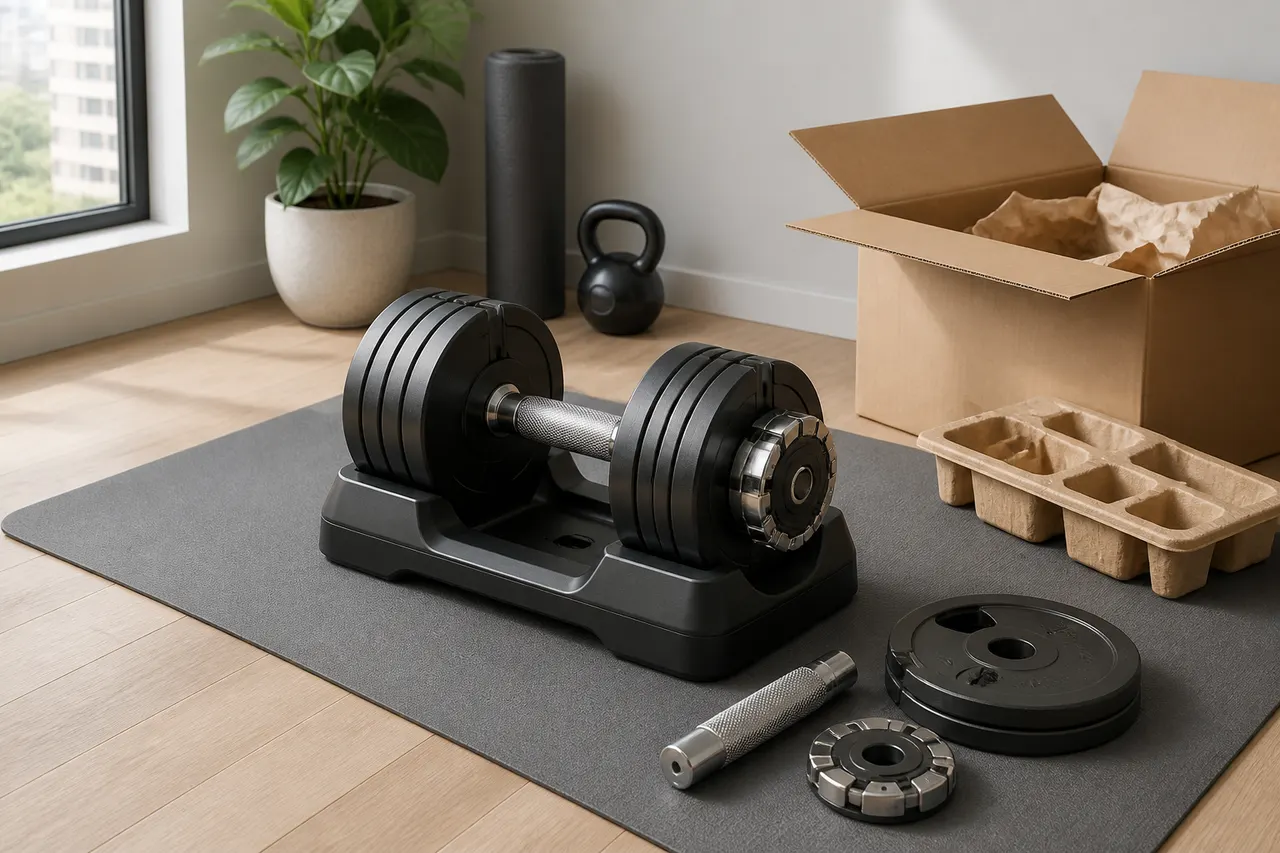
Adjustable dumbbells are valuable not just because they replace multiple pairs with one piece of equipment, but because they make weight changes, training movements, and home storage a workable combination. This guide helps you record evidence from candidates on kako-spreadsheets.com, rule out options with unclear specifications, and organize questions to confirm with sellers before ordering.
Information verification date: August 30, 2026. The current materials do not provide accessible specific product pages, real-time prices, inventory, material certifications, packaged weight, platform transaction steps, or after-sales policies, so this article does not endorse any specific model or treat the appearance in images as verified product performance. Actual ordering should be based on the product page on that day, written seller responses, and the checkout page.
First define your selection range based on training movements and available space
First list the movements you will actually do in the next three months, then decide the weight range. Squats, deadlifts, and rows typically require more room for added weight; lateral raises, curls, and rotator cuff training rely more on smaller weight increments. If you only look at maximum weight, you might buy a product with too high a starting weight or too large increments.
Measure three areas at home 📏:
Storage area: record the actual length, width, and height needed for the base or the entire weight set.
Access area: leave space around the storage location for two-handed operation and removing weight plates.
Exercise area: based on the widest training movement, confirm the dumbbells won't hit walls, furniture, light fixtures, or each other.
Also record flooring conditions. Hard floors require non-slip, shock-absorbing, and appropriately sized mats, but the mats must not interfere with the base sitting level. Renters, upstairs trainers, or night trainers should also factor in impact noise as a screening criterion.
This guide is not suitable for people who need commercial gym-level durability certification, competition equipment certification, or rehabilitation prescriptions; those scenarios require corresponding standard documents or professional advice.
Understand plate-loaded, dial, and slide adjustment mechanisms
Plate-loaded designs typically involve manually adding or removing weight plates and securing them with locking collars. The structure is more straightforward and allows separate inspection of plates and collars, but each weight change requires more steps, and removed plates need separate storage.
Dial designs usually involve selecting a weight on the base and then lifting a locked combination of plates. The key is not how smoothly the dial turns, but whether the selection mechanism locks both ends simultaneously, whether an incorrect setting prevents lifting, and whether the dial can be accidentally operated once the dumbbell is off the base.
Slide designs use a pin, lever, or sliding selector to engage corresponding weights. When checking, confirm that the selector fully enters the positioning slot, both sides point to the same setting, and there is still clear positioning feedback after wear.
Regardless of the mechanism, weight selection labels do not equal actual weighed results. If a product page only shows setting numbers without specifying whether it's one dumbbell or a pair, kilograms or pounds, and whether the handle and base are included, you cannot compare directly.
Check handle, weight plate, and base construction information
For the handle, verify length, diameter, grip material, texture, and unloaded weight. A handle that is too long may collide during presses or curls; one that is too thick may cause grip fatigue faster for users with smaller hands. Product images alone cannot confirm anti-slip effectiveness or long-term comfort.
For weight plates, confirm the weight per plate, quantity, connection orientation, and weight tolerance. A plastic shell does not necessarily mean a certain internal material, and a metal appearance does not prove a specific steel grade. Without cross-sections, material descriptions, or seller confirmation, mark the internal filling and impact resistance as unknown.
The base is not just a storage piece. Dial and slide products often rely on the base to keep weight plates aligned, so check for positioning grooves, non-slip feet, and grip points on the base. If base deformation affects weight selection, shipping packaging becomes a core performance condition, not an accessory detail.
Use a comparison table to record adjustment steps, footprint, and storage differences
Don't just write "convenient" or "space-saving." In your candidate records on kako-spreadsheets.com, create the same fields for each actual product; if the platform page lacks certain information, leave "to be confirmed" and do not fill in with specs from similar products.
Check Item | Plate-loaded | Dial | Slide |
|---|---|---|---|
Weight change action | Put down, unlock, add/remove plates, re-lock | Return to matching base, rotate selector, lift | Return to base, move selector, confirm positioning, lift |
Main locking points | End collars or nuts | Dial, linkage shaft, and plate cams | Pin or slider and positioning slots |
Storage concerns | Is there a fixed location for removed plates? | Base dimensions and plate alignment | Base, protruding selector parts, and pin protection |
Images should show | Locked collars and plate hole positions | Both end settings, base, and lifted combination | Selector fully seated and left-right consistency |
Key items to confirm | Collar specs, thread compatibility | Can it be adjusted accidentally off base? | Pin depth, replaceability of worn parts |
When actually comparing, add individual dumbbell dimensions, total footprint, minimum weight, maximum weight, increment per step, number of pieces in set, and packaging data. Only when units and included contents are consistent does price comparison become meaningful.
Judge usability based on grip positions and range of motion
For curls and rows, check whether the weight ends hit your forearms; for bench press and shoulder press, check whether the two dumbbells can come close together naturally at the top; for goblet squats, confirm there's a stable, safe two-handed grip area near the weight end or handle. 🏋️
Fixed-length adjustable dumbbells may keep the same overall length even at light weights. They may interfere with your body more than traditional small dumbbells in close-grip presses, the top of curls, or seated movements. Plate-loaded designs may change end length as weight changes.
Write your movement requirements as checkable sentences, e.g., "During seated curls, the dumbbell ends must not touch thighs" or "At the top of the bench press, there must be hand clearance between the two dumbbells." Then use the page dimensions to make a cardboard outline, or mark the length on the floor and simulate the movement. If the page lacks dimensions, do not judge based solely on photo proportions.
Check locking parts, weight markings, and set quantity from product images
Product images can support visual checks but cannot prove durability. Look for the following shots 🔒:
Close-ups of the locking mechanism, not just front display shots.
Clear markings for each weight setting or each plate.
The bottom and connection areas of the dumbbell when lifted off the base.
Base positioning grooves, edges, and load-bearing areas.
A flat-lay of the package contents that distinguishes single, pair, and accessory counts.
Separate images for different specs of the same model to avoid using high-end version images for lower-end options.
If the main image shows two dumbbells but the spec name, quantity field, or package list says one, treat it as to be confirmed. A visual set display cannot replace a sales quantity statement.
Also check for conflicts between images, such as inconsistent weight markings, dial settings, collar shapes, or base colors. This may indicate mixed versions on the page. Before ordering, have the seller confirm the actual version corresponding to the selected spec.
Distinguish page-visible information, seller statements, and performance still to be confirmed
Building a three-layer evidence record prevents treating promotional language as conclusions:
Page-visible information: title, spec options, dimension drawings, package list, product images, and fees shown at checkout.
Seller statements: confirm material, weight tolerance, spare parts, packaging method, and after-sales conditions via storable on-site communication.
Performance still to be confirmed: locking durability, reliability after drops, actual noise, long-term grip comfort, and actual weighed results.
Words like "sturdy," "professional grade," "quiet," or "high strength" without test methods, applicable conditions, and results can only be considered promotional descriptions. This article has no actual samples, weighing records, or durability tests, so it cannot confirm these performances.
It's recommended to attach a verification date and evidence location to each fact. Prices, inventory, promotions, shipping, taxes, return deadlines, and available routes can change; screenshots or table records only represent the state at the time of verification.
Complete specification, packaging, and shipping risk checks before ordering
Adjustable dumbbells are high-density heavy goods; a low product price does not mean low landed cost. Before checkout, record separately the product amount, domestic fees, warehouse handling fees, international shipping estimates, insurance or protection fees, destination taxes, and possible remote area surcharges. Also note the currency and exchange rate date.
For packaging, confirm with the seller 📦:
Single or pair, and quantities of handle, all weight plates, locking components, and base.
Net weight per dumbbell, total net weight for the set, gross weight after packaging, and outer carton dimensions.
Are weight plates and base secured separately? Is there impact protection for locking components?
Is it split into multiple boxes? If so, dimensions, gross weight, and contents list for each box.
What photo or video evidence is needed for missing parts, damage, or weight discrepancies?
When obtaining warehouse photos, check the number of boxes, outer carton damage, accessory quantities, weight markings, and locking areas. Visual inspection cannot replace functional testing; if warehouse service does not include assembly or weight selection testing, record that limitation explicitly.
Combining packages is not always cheaper. It may reduce duplicate charges or handling fees, but it may also increase volumetric weight, parcel value, and risk of damage in a single shipment. Splitting packages may increase fixed fees but can satisfy per-box weight limits or reduce loss from a single incident. Use the actual billing rules of your chosen shipping route to calculate combined vs. split total costs; do not give a fixed answer based on experience.
Also confirm destination country requirements for weight, materials, declaration documents, and import duties, and provide accurate product name, quantity, and value. Do not ask the seller or carrier to under-declare, and do not use unboxing to evade taxes or inspections.
Build final candidates and list additional questions to verify
First keep two or three candidates with complete specifications, then supplement evidence item by item. A candidate is suitable for checkout only after the following questions are clearly answered ✅:
Does the selected spec include one dumbbell or a pair?
What is the minimum weight, maximum weight, and increment per step, and in what unit?
Is the nominal weight the total weight per dumbbell, the weight of plates, or the total set weight?
How do you know the locking mechanism is fully engaged?
Can the setting be changed after lifting off the base?
What are the materials of the handle, weight plate shell, internal weights, and base?
What are the dimensions of a single dumbbell, base, packaging, and gross weight?
Can easily worn collars, pins, or bases be purchased separately?
What are the handling conditions for wrong quantities, missing parts, shipping damage, or weight deviations?
Final ranking can use the order of "meets movement weight range," "fits existing space," "locking evidence complete," "packaging data clear," "landed total cost acceptable." If any candidate lacks set quantity, gross weight, packaging dimensions, or locking mechanism description, ask first; don't order just because of a low price.
Without specific product prices, packaging data, and shipping quotes, this article cannot give real savings amounts. The calculable savings should be "landed total cost of original plan minus landed total cost of candidate plan," and simultaneously record the increased risks of locking, damage, spare parts, or after-sales due to choosing the cheaper option.
This screening method is suitable for home trainers with limited space who need multiple weight levels and are willing to verify specifications item by item; it is not recommended for those who are impatient to order, need to frequently drop equipment, cannot accept adjustment steps, or cannot obtain clear packaging and after-sales information. If verification costs exceed the price advantage, choosing a plan with transparent specs, simple structure, or clearer local after-sales is usually safer.
Agent Platform Shopping FAQ
1. What should I know about QC photos on kako-spreadsheets.com?
Every drop-shipping service, including kako-spreadsheets.com, employs a dedicated quality control staff. After your products are delivered to the kako-spreadsheets.com warehouse, a quality check is performed and QC photos of your goods are captured. Typically, three pictures are taken, and the staff confirms that the color, dimensions, specifications, and quantity align with your order. They also inspect for any defects. Electronic products are an exception, as only their external appearance is examined. If defects or incorrect size or color are found, the staff promptly initiates a return to the seller, ensuring the items you receive meet high standards.
2. How is product quality assessed on kako-spreadsheets.com?
To evaluate product quality on kako-spreadsheets.com, examine the QC photos—do not depend solely on images from the factory, as those are usually edited. Use the QC photos to verify whether the product satisfies your particular detail requirements before making a purchase. Additionally, remember to steer clear of items with extremely low prices, since they often have poor quality.
3. How do I find the product I want to buy on kako-spreadsheets.com?
You can search with a single keyword on kako-spreadsheets.com or visit the category page, where items are also grouped by brand. Longer search phrases generally produce fewer results than shorter ones but are more accurate. For instance, you could search for "Air Force 1 White," "sneakers," or just "Air Force 1."
4. What product categories are available on kako-spreadsheets.com?
kako-spreadsheets.com features a wide variety of product categories, such as shoes, T-shirts, sweaters, hoodies, jeans, sweatpants, shorts, beach shorts, factory clearance items, down jackets, baseball jerseys, shirts, hats, jewelry, bags, electronics, sunglasses, socks, underwear, and trendy collectibles.
5. Which platform offers the best coupons for kako-spreadsheets.com users?
I suggest Kakobuy because it currently provides a $15 discount code without a minimum purchase requirement. This is an excellent option for users sending small packages. The promo code is kakobuy888.
Browse our latest products and find your next favorite item.