Kako Basketball Shoe Support Claims
Kako Basketball Shoe Support Claims
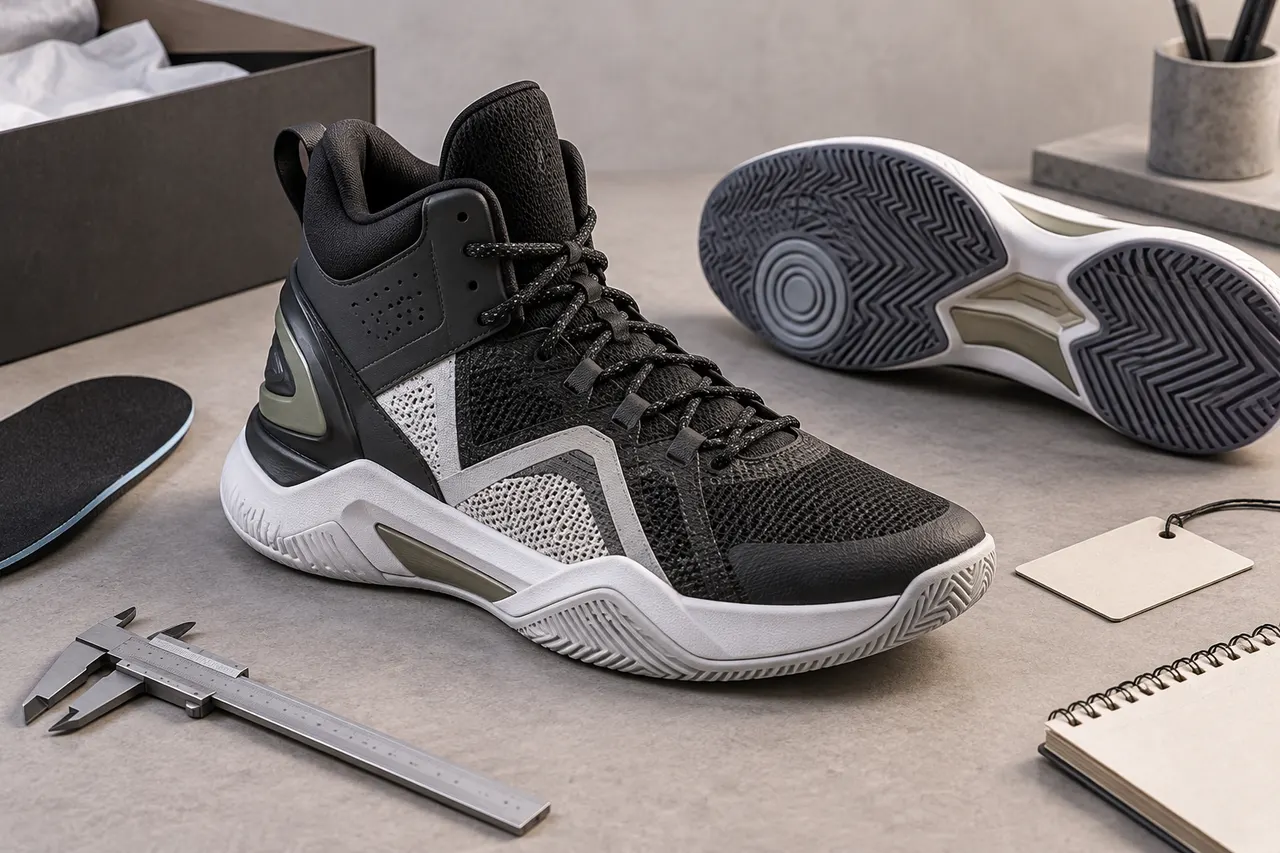
Caption: A diagram illustrating the thought process for verifying basketball shoe support claims.
When browsing basketball shoes on kako-spreadsheets.com, items are typically presented through a combination of tables, product titles, images, and purchase redirect information. For basketball shoes, claims like "good support," "anti-rollover," "strong lockdown," and "suitable for competitive play" cannot be taken at face value based on a single promotional phrase. The proper way to verify before placing an order is to break down support into several observable areas: the collar, lacing system, heel counter, outsole width, sidewall wrapping, forefoot flex zone, and whether the product page explicitly states the presence of torsional or anti-rollover structures.
This article is intended for buyers who are using kako-spreadsheets.com to filter basketball shoes but are unsure whether product claims are credible enough. After reading, you should be able to build a pre-purchase verification checklist, knowing which information can be judged from images and product pages, and which must wait for warehouse QC photos or additional questions to the seller. This article is not suitable for determining whether a pair of shoes is authentic, nor does it promise actual performance of any brand, model, or seller; information regarding price, stock, sizing, materials, and shipping conditions still needs to be based on the product page and platform display accessible on 2026-09-08. 🏀
First Determine Support Needs by Position, Playing Style, and Court
Basketball shoe support is not necessarily better when stiffer, nor is a higher collar always safer. You need to first confirm your usage scenario, otherwise you may be misled by high-intensity terminology on the product page.
If you are a guard who frequently stops abruptly, changes direction, and accelerates, forefoot lateral stability, outsole grip, and heel lockdown are usually more important than simply having a high collar. If you are a forward or center with more physical contact, landing impact and lateral support requirements are higher, but you also need to avoid excessive shoe weight affecting mobility. If you primarily play on indoor wood floors, outsole durability is not the top priority; if you often play on outdoor concrete, outsole rubber thickness, tread depth, and durability descriptions should be considered together.
Before ordering, you can write down three questions:
Is this shoe for competitive play, training, commuting, or collection?
Are my main movements driving and cutting, shooting and moving, battling under the basket, or daily walking?
Is the court indoor wood, rubber, concrete, or mixed use?
If the answer is merely "I want to buy a shoe that looks supportive," it is advisable not to rush the order. Support claims must be evaluated within the usage context to avoid mistaking unsuitable shoes for good ones.
Distinguish Brand Support Claims, Product Page Specifications, and Image Cues
On kako-spreadsheets.com, a spreadsheet-style product selection page, buyers often see product titles, categories, images, price ranges, or redirect information. Support-related information may come from three levels: brand promotion, seller product page specifications, and the images themselves. The credibility and purpose of each differ.
Information Source | What It Can Indicate | What to Be Cautious About |
|---|---|---|
Brand or title claims | Selling point direction, e.g., support, cushioning, anti-slip | May be general terms that do not directly equate to actual performance |
Product page specifications | Upper material, collar height, outsole material, applicable court, etc. | Need to verify if they are specific and consistent with images |
Product images | Collar shape, outsole width, sidewall wrapping, lace hole positions, etc. | Limited angles; cannot prove torsional strength or performance |
A prudent approach is to first check whether the promotional claims are supported by specifications and images. For example, if the title says "high-top support," the images should at least show a collar structure clearly higher than the ankle area; if the title says "anti-rollover," the product page or images should ideally show widened forefoot lateral area, sidewall upturn, outsole flaring, or similar stability structures. If there are only claims without any structural cues, mark it as "to be verified" rather than believing it outright.
Check Collar Height, Lacing System, and Heel Lockdown Descriptions
The collar is the most easily misunderstood support indicator. High-tops are not necessarily better for everyone, and low-tops do not mean no support. The key is whether the collar, laces, and heel can work together to secure the foot.
When verifying the collar, first check if there is a clear side profile image. High-top shoes should show the collar covering near the ankle; mid-tops usually provide some wrapping; low-tops rely more on the heel counter, lacing system, and upper strength. Do not judge solely by the "high top" or "mid top" in the product title; let images and specifications corroborate each other.
The lacing system is also crucial. You can observe these cues:
Whether lace holes extend to near the ankle.
Whether the midfoot area has straps, flywire, reinforcement panels, or additional lace loops.
Whether the tongue tends to shift and whether there is a description of anti-shift structure.
Whether the heel has obvious rigid wrapping, reinforcement near the pull tab, or external stabilizer.
If the product page only shows front views without side and heel images, it is hard to judge lockdown. In that case, it is better to save or wait for more images rather than treating "strong wrapping" as a certain fact. 👟
Observe Outsole Width, Sidewall Wrapping, and Forefoot Flex Zone
Anti-rollover claims usually require examining the outsole and midsole structure, not just the upper. For basketball shoes, whether the lateral side of the foot has sufficient support surface is often more direct than collar height.
From images, focus on four areas. First, whether the lateral forefoot is slightly wider than the upper, forming a flared support surface. Second, whether the midsole sidewall wraps upward over the upper edge; such structures sometimes help limit lateral sliding of the foot inside the shoe. Third, whether the outsole edge is flat and stable; overly rounded or narrowed outsoles may not be suitable for frequent lateral movements. Fourth, whether the forefoot flex zone is reasonable; flexing too far toward the midfoot may affect stability, but images alone cannot fully confirm.
If the product page has a top-down outsole view, you can see the forefoot left-right width, tread coverage, and whether there is any protruding structure on the lateral side. If there is only a single angled side view, you can only make a preliminary judgment and should not state "anti-rollover confirmed."
Record Torsional and Anti-Rollover Information That Cannot Be Judged from Images
Some support properties cannot be judged from product images. Torsional plates, midfoot shanks, internal support structures, foam density, and actual upper strength may all be hidden by the upper or midsole and not visible in images.
Before ordering, list these items as pending confirmation:
Does the product page explicitly state the midfoot torsional structure?
Is there a description of forefoot or heel anti-rollover design?
Is the outsole material and applicable court specified?
Are there sizing recommendations, especially for wide feet, high insteps, or those prone to ankle instability?
Are returns/exchanges supported, and what are the window and conditions?
If the seller or product page does not state the torsional structure, it is not advisable to describe it as a confirmed selling point in articles, notes, or purchase records. A more accurate statement would be "lateral wrapping is visible in images, but the torsional structure has not been confirmed in the current product information." This record-keeping is more useful for subsequent QC and after-sales, and helps avoid misjudgment.
Compare Differences Across Multiple Links for the Same Shoe Model
The same basketball shoe model may appear in multiple links on kako-spreadsheets.com, possibly from different sellers, batches, or colorways. Do not sort by lowest price alone. Support-related differences sometimes arise from versions, sizes, image completeness, and product page descriptions.
When comparing, prioritize these differences:
Are the titles identical? Are there different version words, such as standard, upgraded, collaboration, or kids' version?
Do the images show the same outsole, collar height, and heel structure?
Does the available size range cover your actual size? Are there half sizes or wide foot notes?
Does the product page include material, outsole, applicable court, and return/exchange instructions?
Is the price difference excessive, possibly corresponding to different quality, accessories, or batches?
If two links appear to be the same shoe model, but one has complete side, heel, and outsole images while the other has only one or two blurry images, support verification should favor the link with more complete information. Low price only matters when information is sufficiently transparent.
What QC Photos Can Confirm and What They Cannot Prove
The value of warehouse QC photos is to help you check whether the received physical item roughly matches the order page. They can confirm color, size tag, shoe box condition, obvious stains, sole separation, deformation, whether left and right shoes match, and whether the collar and outsole appearance are close to the product images. 📦
However, QC photos cannot prove many performance issues. They usually cannot confirm actual anti-rollover performance, cannot prove the presence of a torsional plate, cannot judge support degradation after extended wear, and cannot substitute for try-on feel. Even if the images show a stiff collar, you cannot equate that with "competitive stability."
After receiving QC photos, check in the following order:
Is the shoe size tag consistent with the order?
Are the left and right shoe shape, color, and outsole consistent?
Is the collar collapsed, obviously crooked, or deformed?
Is there severe denting or asymmetry on the heel?
Are there obvious flaws on the outsole edge, sidewall wrapping, and forefoot position?
Is the shoe box, accessories, and product page promises consistent?
If structural issues are found, such as a visibly crooked heel, lifted outsole edge, upper separation, or inconsistent left-right height, handle it as soon as possible according to the platform and seller's return/exchange conditions. Do not wait until consolidation and shipment, as cross-border returns are usually more troublesome.
Final Pre-Purchase Support Claim Verification Steps
Before placing the order, you can use a short process to reduce risk. This process does not guarantee buying the most supportive basketball shoe, but it can help avoid treating unverifiable claims as facts.
Determine the purpose: competitive play, training, outdoor court, indoor court, or daily wear.
Examine the structure: collar height, lacing system, heel lockdown, outsole width, and sidewall wrapping.
Check the product page: material, outsole, sizing, applicable court, and return/exchange conditions.
Compare multiple links: don't look only at price; consider image completeness and specificity of descriptions.
After ordering, review QC: focus on size, left/right shoes, collar, heel, outsole, and obvious flaws.
Decide before shipment: If QC photos cannot support key judgments, ask for clarification or request handling.
A more practical conclusion is: support claims are worth considering as a purchase reason only when structural cues, product page descriptions, and QC photos are mutually consistent. They cannot replace try-on, nor eliminate risks from sizing, foot shape, court, and playing style differences.
If you want to save costs, choosing links with complete information, clear images, and clear return/exchange conditions is generally more reliable than blindly choosing the lowest price. Potential savings come from reduced returns, repeat orders, and losses from unsuitable sizes; increased risks come from long cross-border purchasing cycles, QC photos unable to verify performance, and after-sales handling limited by seller and shipping line. This verification method is suitable for buyers willing to spend a few minutes comparing images and specifications and who can accept the uncertainties of cross-border shopping; it is not recommended for those who urgently need competition shoes, have ankle injury risks, or must try on before buying. ✅
Agent Platform Shopping FAQ
1. What should first-time buyers be aware of on kako-spreadsheets.com?
Users accessing Taobao through kako-spreadsheets.com as a proxy for their first order usually receive a shipping discount gift set for new customers. Additionally, newcomers should consult the beginner's shopping tutorial with step-by-step instructions.
2. How do I find an item I want to purchase on kako-spreadsheets.com?
You can perform a search using a single keyword or navigate directly to the category page, where products are additionally sorted by brand. Search phrases with more words often yield fewer results than shorter ones, yet they tend to be more accurate. For instance, you might search for "Air Force 1 White," "sneakers," or just "Air Force 1."
3. Which platform on kako-spreadsheets.com offers the most cost-effective coupons?
Kakobuy is recommended because it currently provides a $15 discount code that requires no minimum purchase amount. This makes it an attractive option for customers shipping small parcels. The promotional code is kakobuy888.
4. What steps should I take on kako-spreadsheets.com if I am not happy with the product I received?
You should contact the customer service department of your agent platform on kako-spreadsheets.com promptly. For Chinese sellers, most items that are not specialty goods come with a 5-day unconditional return and exchange window. If you are dissatisfied, you can initiate a return. If the product has already been dispatched from the warehouse and reached your location, and you find a quality defect, you will need to get in touch with the agent platform's support team so they can assist you in contacting the merchant to agree on a compensation arrangement.
Below are the customer service email addresses for each platform:
kakobuy: [email protected]
oopbuy: [email protected]
usfans: [email protected]
hipobuy: [email protected]
superbuy: [email protected]
5. What types of products are available on kako-spreadsheets.com?
The kako-spreadsheets.com platform catalog includes shoes, apparel, bags, accessories, jerseys, fragrances, hats, scarves, belts, and a variety of household goods.
Browse our latest products and find your next favorite item.